
·
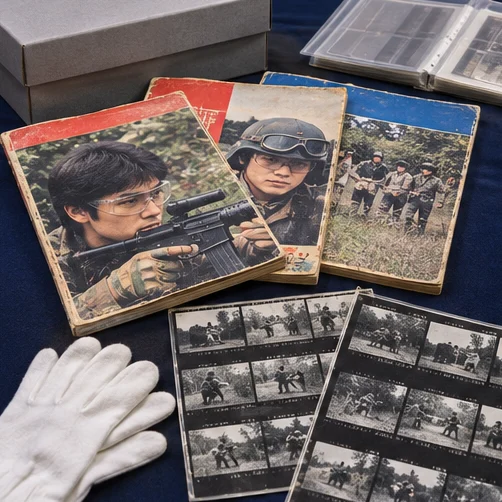
The familiar problem of objects surviving in large numbers yet remaining in a state of disarray as to their sequence and meaning to us applies here. The items in a sales catalog represent the view of a particular company and how they wished to market their products, whereas a collection comprises items which a person or persons have chosen to retain. This useful approach to the history of a hobby looks at the company history (chronology) as distinct from the wider history of the hobby, and views protection gear and venue etiquette as cultural evidence.
Start with the catalog, not the legend
Company records are valuable precisely because they are specific. Tokyo Marui's official product chronology records the company's entry into model-gun products in 1979, its first airsoft item in 1985, and an electric airsoft milestone in 1991. Readers can consult the official Tokyo Marui product chronology because it provides a company-authored sequence that can be checked against catalogs and other documentary material.
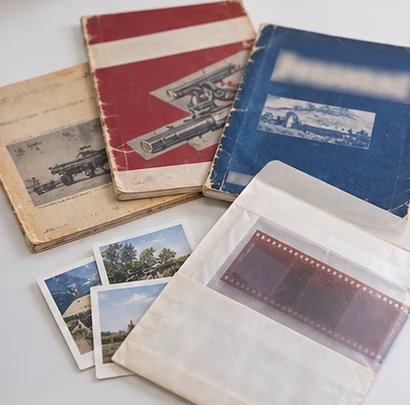
Hobby catalogs are the most practical of the "documents useful for research" for early analysis of a history of Japanese airsoft. It establishes what products the company displayed in print for purchase, establishing the dates when products were introduced in print (including languages used for products and packaging), establishment of design for products and packaging, and establishment of categories for products to be displayed for sales.
If someone with an even cursory knowledge of the hobby finds themselves holding several editions of a retailer's catalog from different eras, it can easily be misread as a near complete historical account. But each of these 'histories' must be accurately labeled for what they actually are: a printed list of available products in a certain order, a shift in language used to describe a product, a change in visual appearance, or even just proof that a certain product or even category of products existed at all.
Look for changes such as images of products being displayed in different scenarios, changes in language used to describe products, or even changes in the visual design of a catalog. These things can indicate a shift in marketing approach to appeal to a wider audience. Also note how repeated reference to items such as carrying cases, masks, and other protection as well as items that are displayed at a venue may indicate an attempt to make airsoft look more structured and accessible to participate in.
Read company chronology with a narrow lens
Again, these are specific dates and need to be read within a certain frame. These dates are those of Tokyo Marui, and therefore only provide a maker's perspective on history. Thus, they are not the same as a history of airsoft in general, nor are they necessarily accurate in all cases. In reading a company's timeline, a historian must remember to always ask, "When did this maker say this happened?"
As a marketing and distribution event, the 1991 debut of electric airsoft in Japan is worth exploring the same ways that have been already done to the ways in which airsoft catalogs were organized and airsoft hobby culture was communicated to new participants and fans. Information about the steps that this product went through is useful but doesn't necessarily translate to when clubs were founded, when publications began to change their point of view, or how people actually encountered the hobby of airsoft.
Treat collecting as evidence with fingerprints
Museum-style collecting of the history of Japanese airsoft starts with the historical object in question, followed by information on its provenance (where it came from and where it has been) and finally an interpretation of its historical significance. As with any evidence, a collector's historic objects are imbued with 'fingerprints' of their past life as something that was kept by a particular person for particular reasons.
Museum collecting of old airsoft items of all kinds would benefit from a clear separation of three aspects of the collecting process: the objects themselves (the physical artifacts), their provenance (where they came from, who had possession of them in the past and how they got to you) and the interpretation of all this for the audience. So: object, provenance and interpretation.
The group of items can offer evidence of changing presentation and of participation in airsoft. However, the items should not be mistaken for evidence of all Japanese airsoft participants past and present.
A full catalog contains all pages of a magazine in the right order. Some pages may be damaged, while others are lost. However, a single loose page contains only an image and possibly some text. Notes written by hand are not automatically of a particular time. Take photos of items as found and mark any wear. Any later remarks must be entered in a separate field.
Electric airsoft changed the story told to newcomers
Because electric airsoft represents a recognizable product category that Hobby Imports can market to the outside world, it also represents a means by which Hobby Imports can explain the hobby of airsoft to outsiders. In other words, the history of electric airsoft needs to be studied as the history of how airsoft was marketed to Japanese outside of the culture of airsoft.
This should remain modest, i.e. do not turn one single catalog into a trend-setting publication for the whole of Japan. We need to find several independent sources that in the end – even though they show a change of presentation – still remain in the dark about the scope of this change and its effects.
Organized recreation leaves a paper trail
A full historical understanding of a civilian recreation activity such as airsoft is better served by a broader historical archive than that of merely products. Organized recreation events, location notices, and event flyers, photographs, and displays of airsoft equipment of all kinds at times located within specific venues all help recreate a sense of how an activity was experienced by others and thereby organized into a public (or semi-public) experience and a shared activity of others in similar situations.
Hobby memorabilia for airsoft including protective equipment should be recognized for what they are – proof of organized recreation and how people participated in the hobby and prepared for it. The item should be labeled for what the source called it, how it was displayed and if the date on it is confirmed or not. Do not confuse display of historical airsoft equipment with needed protective gear for current activities and do not falsely advertise historic items for airsoft as currently needed for playing airsoft.
For organized recreation also the way how participation and correspondence with other players was structured on a venue can be very valuable for the historian. A single notice does not necessarily have to prove that all participants did behave as requested in the announcement, nor does a single mention of membership requirements have to prove that all participants were members of a club.
When exhibiting a collection, it is also important to distinguish between displaying items to show historical equipment and actively encouraging visitors to play with the items on display or to take part in recreational activities in an organized manner. Likewise, when making a documentary, it is also important to distinguish between describing organized recreation and encouraging viewers to go and operate, modify or source replicas of historical items.
The history therefore will be layered in its approach to using Catalogs for how something was presented, the Company's historical Chronology for specific factual content such as when certain products or packaging were released, a Collection for specific items that someone wanted to keep for specific reasons and items in relation to where someone kept them and how they displayed items, and Organized Recreational activity for historical boundary information.
Related articles
What a Japanese Hobby Catalog Can Tell You
Read original hobby publications as historical records of makers, audiences and editions.
Read More